Player Habit Shifts When Layered Incentives Activate Across Portable Wheel and Card Simulations in Cross-Platform Environments
Olivia Peters · Sep 28, 2026
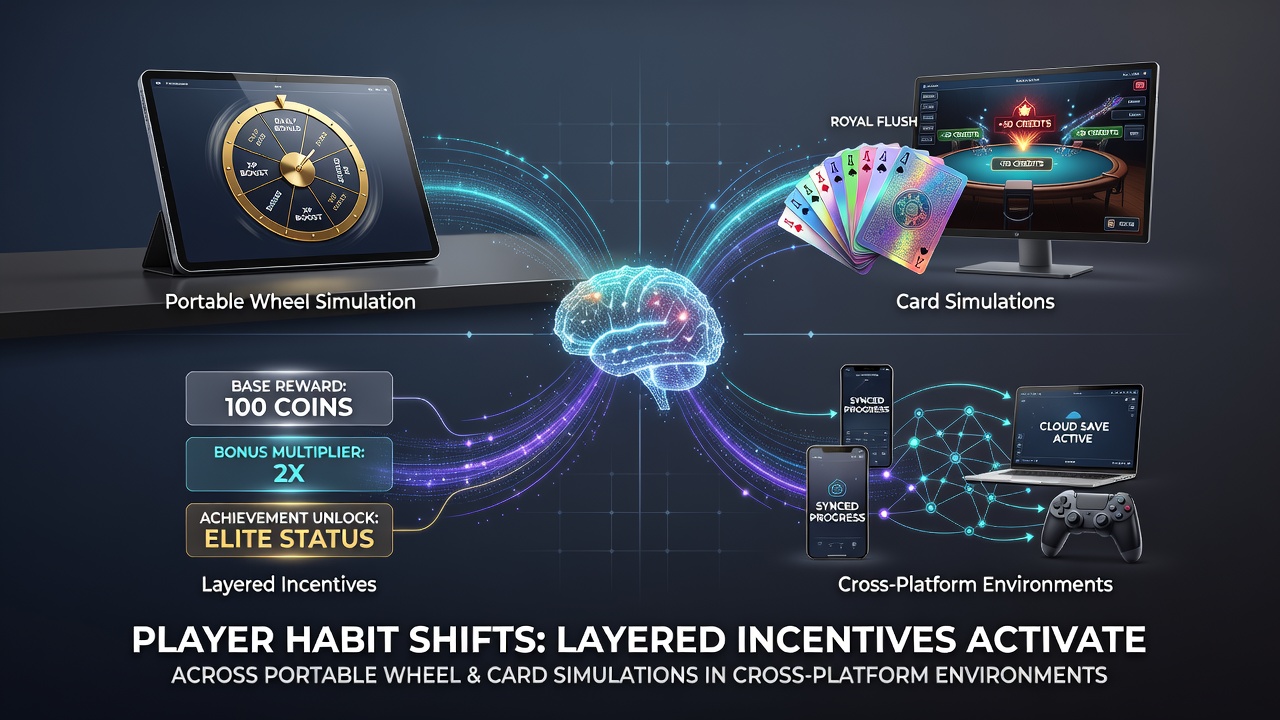
Player Habit Shifts When Layered Incentives Activate Across Portable Wheel and Card Simulations in Cross-Platform Environments
Portable wheel simulations and card-based experiences operate within environments where layered incentives trigger at multiple points during a session, and these activations produce measurable adjustments in how participants allocate time across devices. Data collected through platform analytics in September 2026 indicates that session continuity increases when reward layers stack sequentially, particularly when users transition from smartphone interfaces to tablet or desktop versions without losing accumulated progress. Synchronization protocols maintain incentive status across platforms, which allows sequences of wheel spins and card draws to continue under the same reward structure.
Layered Incentive Structures in Cross-Platform Settings
Operators implement incentives through tiered systems that combine immediate rewards with deferred multipliers, and these layers activate based on metrics such as consecutive plays or cumulative wager amounts. Research from the New Jersey Division of Gaming Enforcement shows that participants extend engagement periods once initial bonuses convert into progressive elements tied to both wheel outcomes and card hand resolutions. Cross-platform tracking records reveal that users who begin on mobile wheel simulations often migrate toward card variants when additional incentive tiers unlock, because the unified account system carries forward eligibility without requiring separate registrations.
Observed Adjustments in Player Session Patterns
Analytics platforms document shifts in session frequency and duration once layered incentives reach activation thresholds, and these changes appear consistent across regions monitored during the third quarter of 2026. Participants demonstrate increased return rates within 24-hour windows when incentives span both wheel and card formats, while single-platform engagement shows shorter intervals between logins. Synchronization reduces friction during device switches, which contributes to sustained activity because progress in one simulation type directly influences reward availability in the other.
Comparative Dynamics Between Wheel and Card Formats
Wheel simulations tend to produce rapid incentive triggers due to their shorter cycle times, whereas card experiences introduce variability through decision sequences that can delay or accelerate subsequent layers. Observers tracking September 2026 data note that combined participation across both formats results in redistributed time allocation, with users dedicating portions of extended sessions to whichever simulation currently holds an active multiplier. Platform logs indicate that cross-device continuity amplifies this redistribution because incentive states persist regardless of the hardware in use.

Studies conducted by the University of Nevada, Las Vegas Center for Gaming Research highlight that participants maintain higher total interaction volumes when incentives bridge the two simulation categories, and this pattern holds whether entry occurs through wheel or card entry points. The presence of accumulating prize pools tied to both formats further encourages alternating between the two rather than focusing on a single type.
Device Transition Effects on Incentive Utilization
Cross-platform environments record elevated utilization rates for layered incentives when users move between portable devices and stationary setups, and transition events often coincide with activation of secondary reward tiers. Metrics compiled in September 2026 demonstrate that sessions initiated on smartphones frequently conclude on tablets once a new incentive layer becomes available, because larger screens facilitate monitoring of multiple active bonuses simultaneously. Data synchronization prevents duplication of effort, which streamlines the process of claiming rewards earned across wheel spins and card rounds.
Conclusion
Platform data from September 2026 establishes that layered incentives reshape participation sequences when portable wheel and card simulations operate under unified cross-platform frameworks, and these adjustments manifest through altered session lengths, device preferences, and format alternation rates. Regulatory reports and academic analyses continue to track these patterns as synchronization capabilities expand, providing ongoing records of how incentive activation influences engagement distribution across available hardware options.